A cardboard box, a pannier held together with velcro, a clear plastic case that
has been ridden to golf every week for three seasons, one side branch that worked
and was abandoned anyway — and the two versions currently on the workbench.
Everything that worked, and everything that didn't.
Berlin·2023 – today·4 prototypes built, 2 in progress
The problem is not the clubs. The problem is that golf bags are soft.
A rear rack carries weight by holding a rigid thing at a few fixed points; a golf
bag is a floppy tube designed to hang off a shoulder. Every bike-and-golf idea
eventually collides with that, and this is the log of colliding with it four
times in a row.
None of this was designed on a computer. It was cut, drilled, taped and then
ridden to a driving range in Berlin until something went wrong.
May 2023 · v1
The cardboard box
Verdict: proved the idea, survived nothing
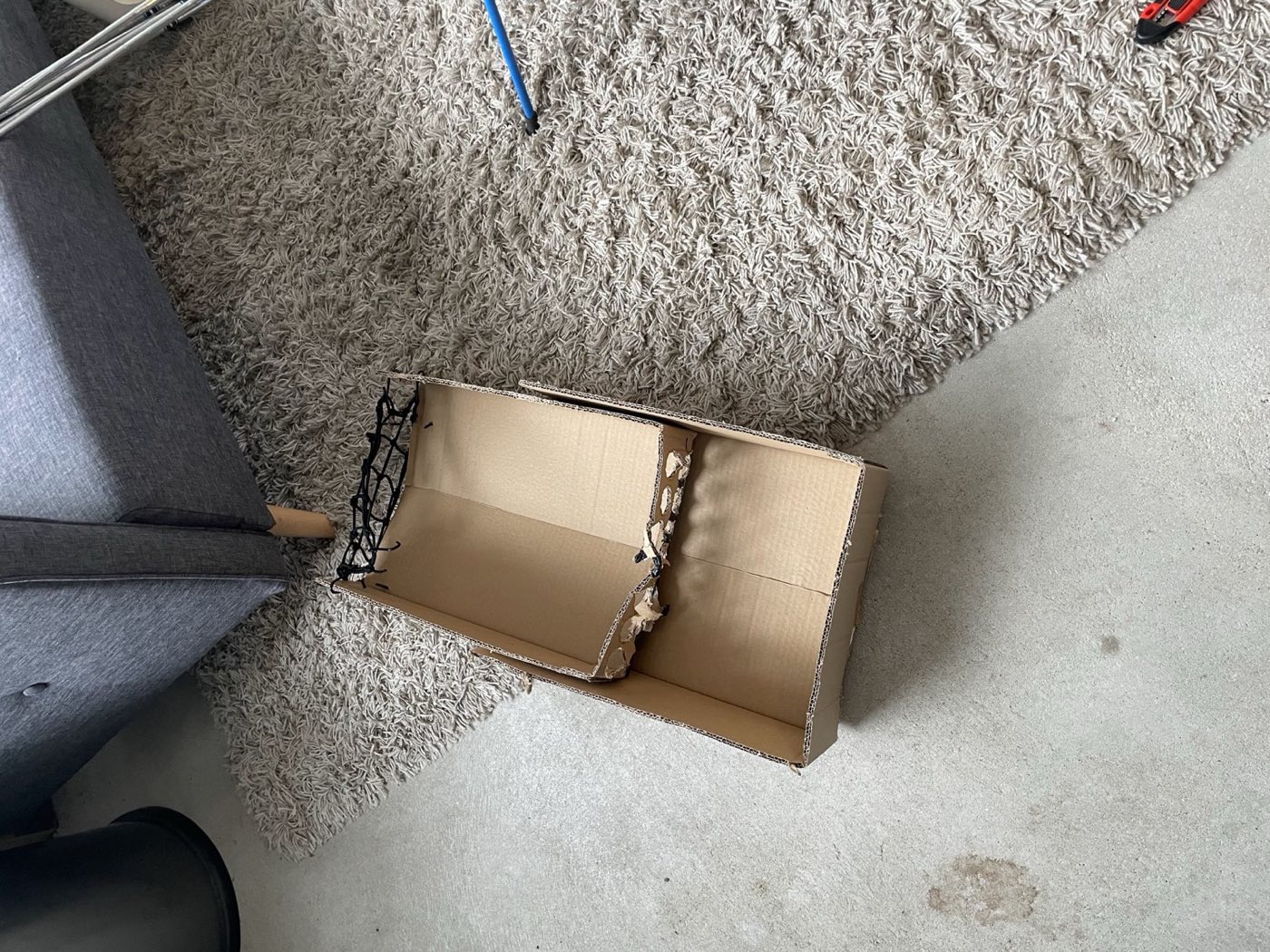
The first version was a cardboard box with a bungee net over the top, strapped
onto the rear rack. It cost nothing and it answered the only question worth
asking first: can a box of golf clubs sit on a rear rack and still be a
bike you'd want to ride?
It could. The bike handled better than expected — a load over the rear axle is
far more stable than a bag on your back. The cardboard, predictably, did not
enjoy the rain. But by the end of that first ride the shape of the product was
already clear: something rigid, roughly the height of a set of irons, hanging
off one side of the rack.
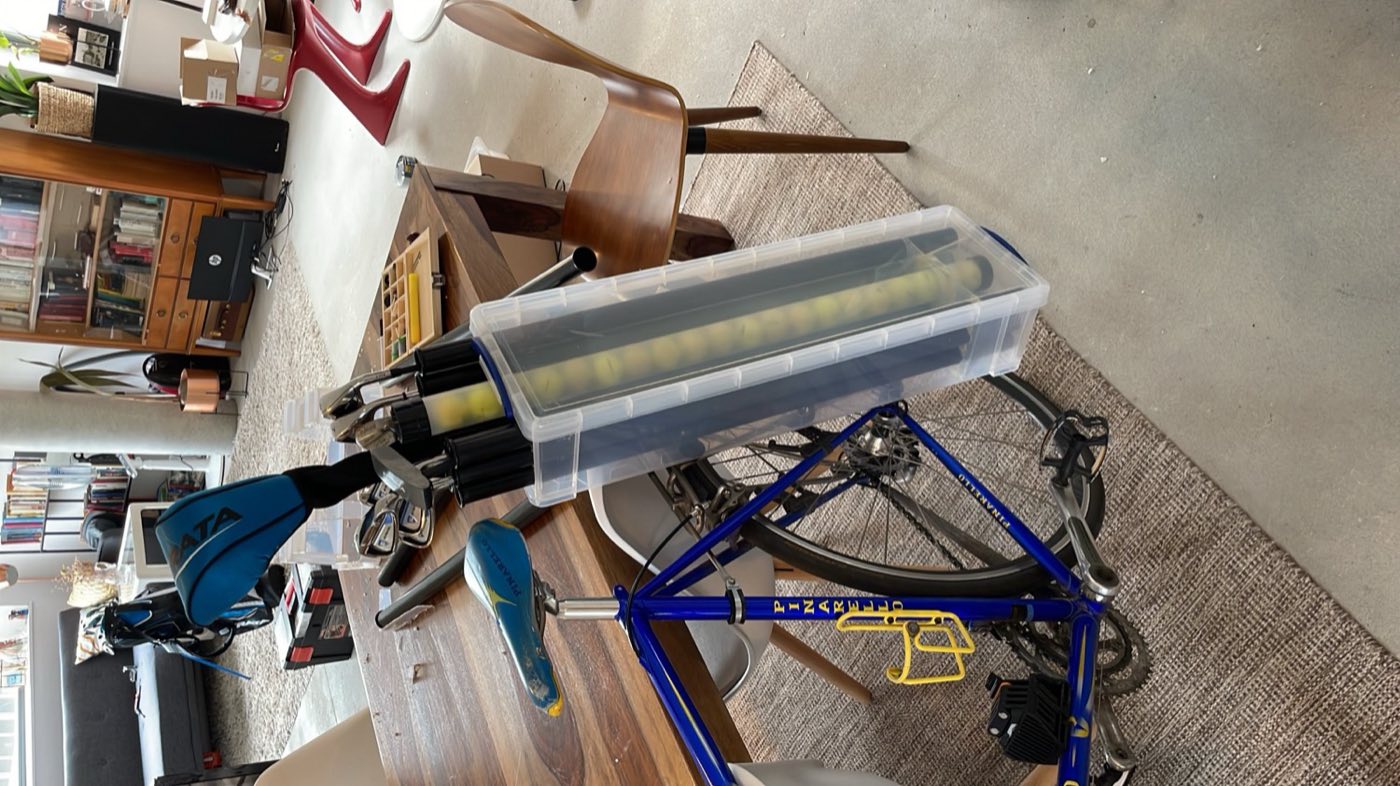
A clear plastic storage box replaced the cardboard within days. It was the
wrong box in every dimension, and it stayed in service for months.
Where it started. Cardboard, a bungee net, and no idea whether any of it would work.The replacement: a clear storage box, entirely the wrong size, which nonetheless carried clubs for a whole season.
July 2023 · v2
The soft one
Verdict: the honest dead end
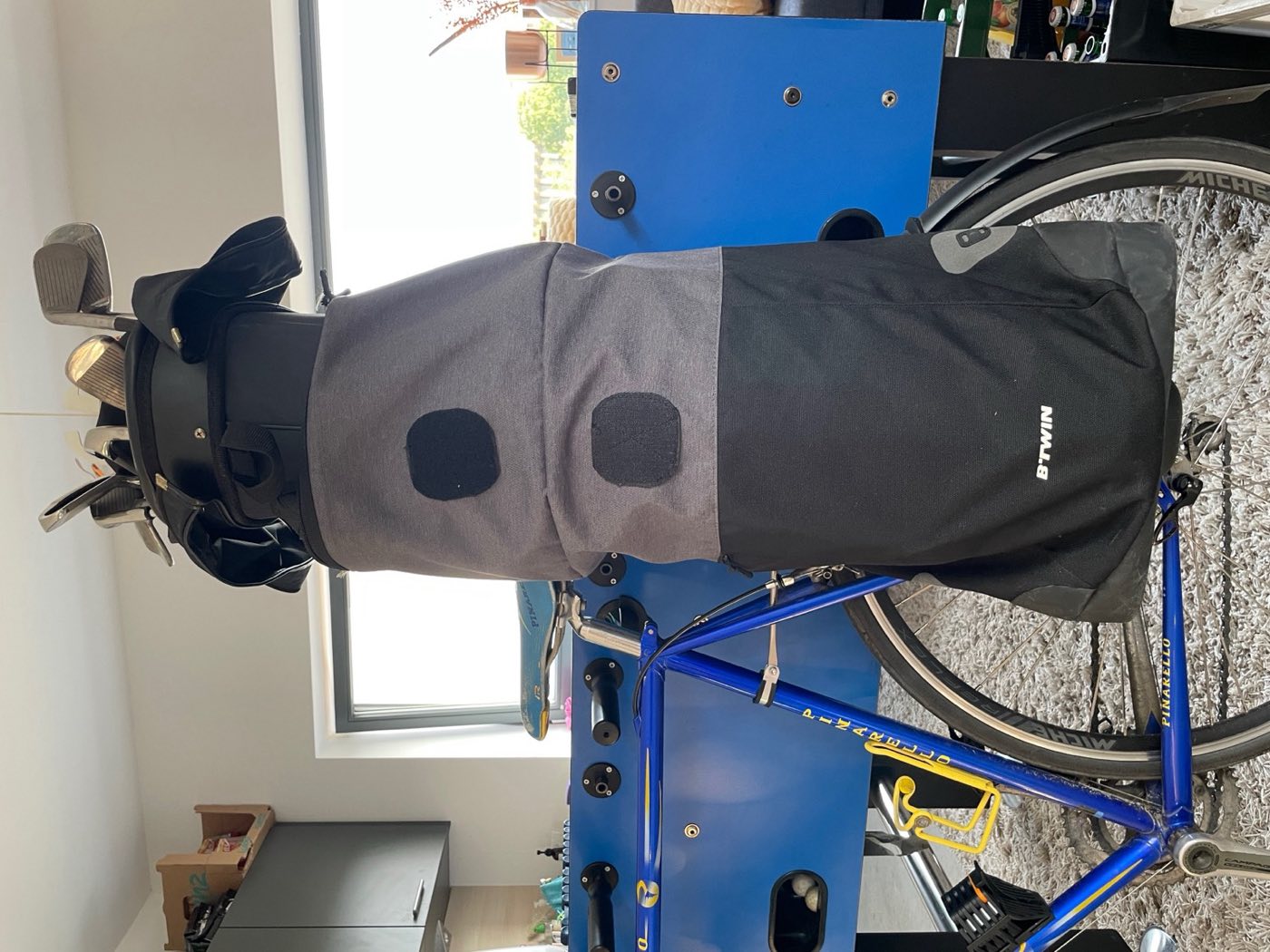
Version two went the other way: instead of making a box behave like a golf
bag, make a golf bag behave like a pannier. A bicycle pannier was joined to
the top half of a golf bag with velcro, and the result hung off the rack
looking almost like a product.
Almost. Loaded with clubs it sagged, and a sagging bag on a rack pulls sideways
every time you stand on the pedals. Velcro that holds fine in a living room
works loose over a few kilometres of cobbles. And the clubs — the whole point —
were carried by fabric that had no interest in protecting them.
This was the version that taught the actual lesson: the rigid wall isn't a
compromise you accept to get the thing mounted. The rigid wall is the
product.
It is worth saying plainly, because it is the reason no such product exists
on the market: rack mounting requires a rigid wall, and golf
bags are soft. Everyone who tries this arrives at the same fork, and most
people take the soft branch because it looks easier.
Pannier plus golf-bag top, joined with velcro. It looked convincing standing still.Off the bike it was a bag again — but a bag that couldn't stand on its own on the course.
October 2025 · v3
The one that actually works
Verdict: three seasons, weekly, zero mount failures
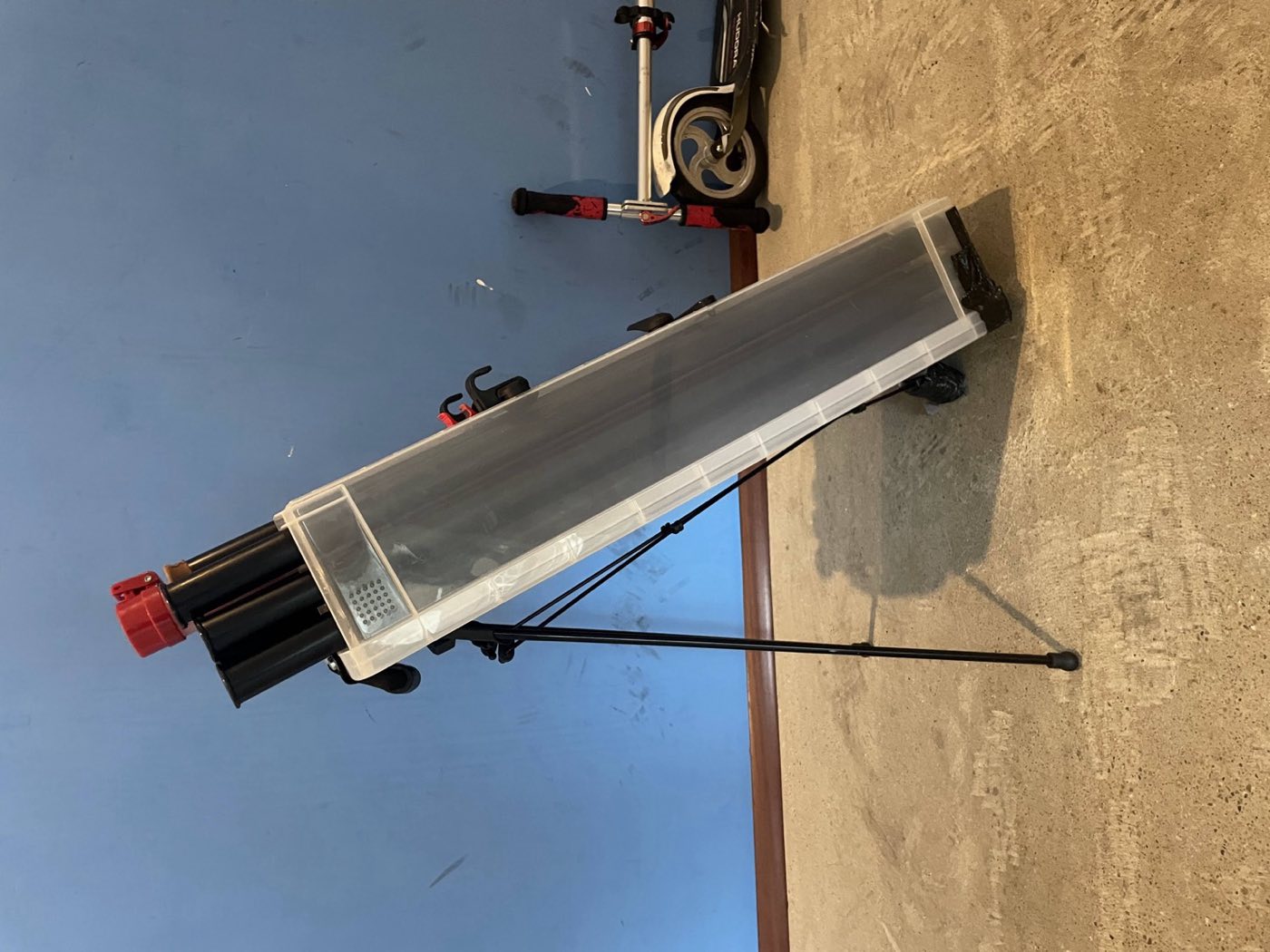
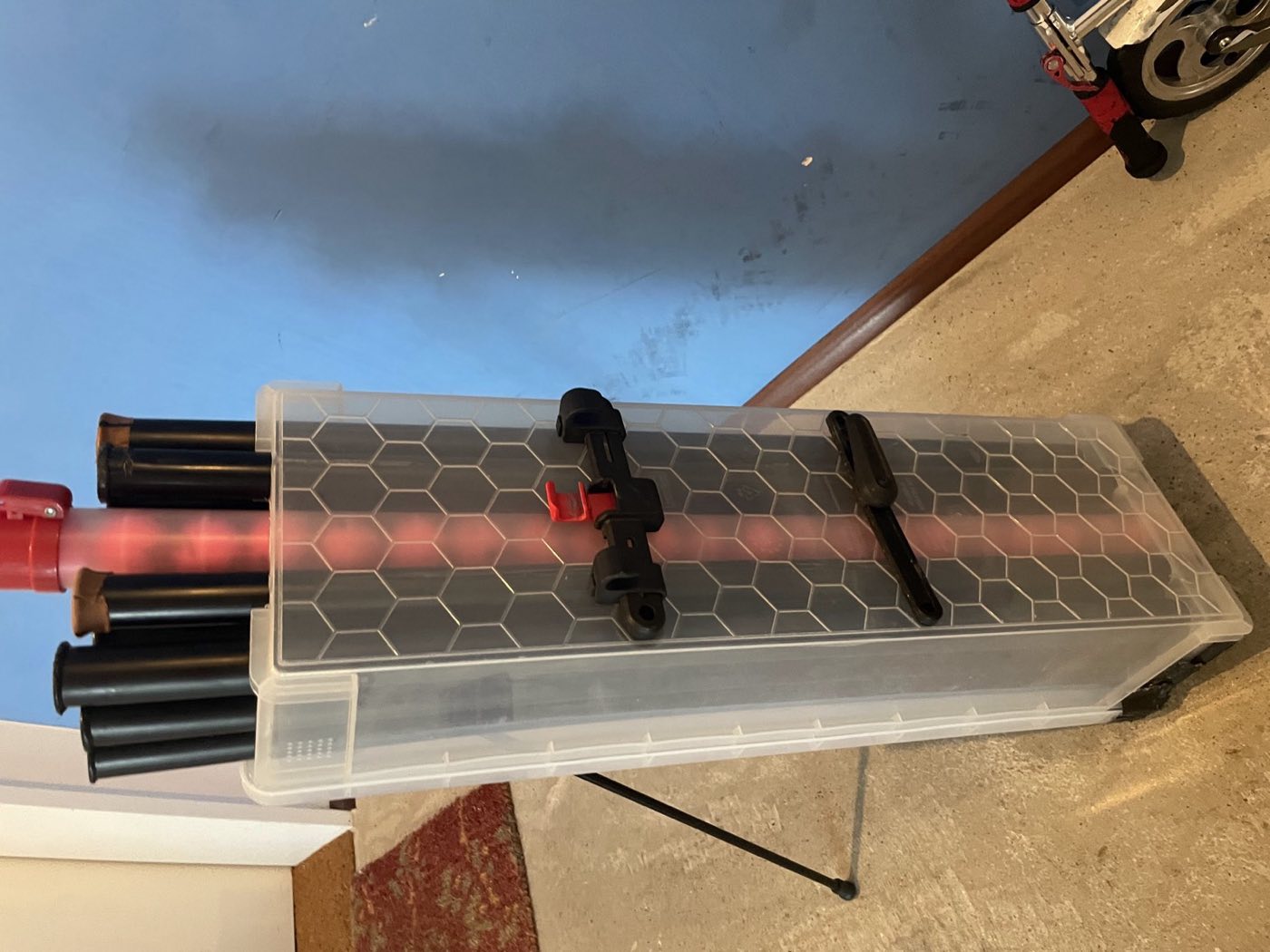
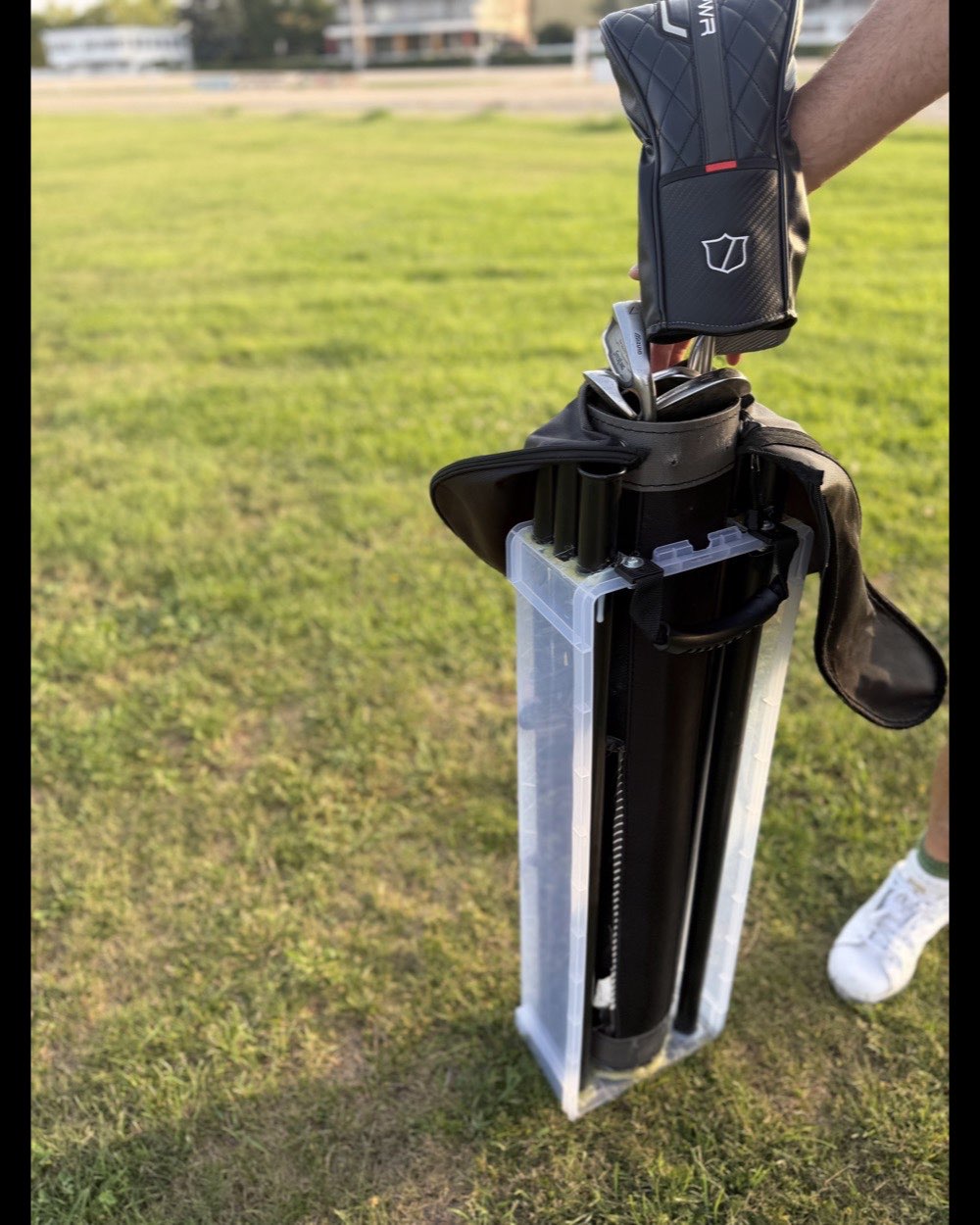
Version three is the current prototype and the reason this website exists. A
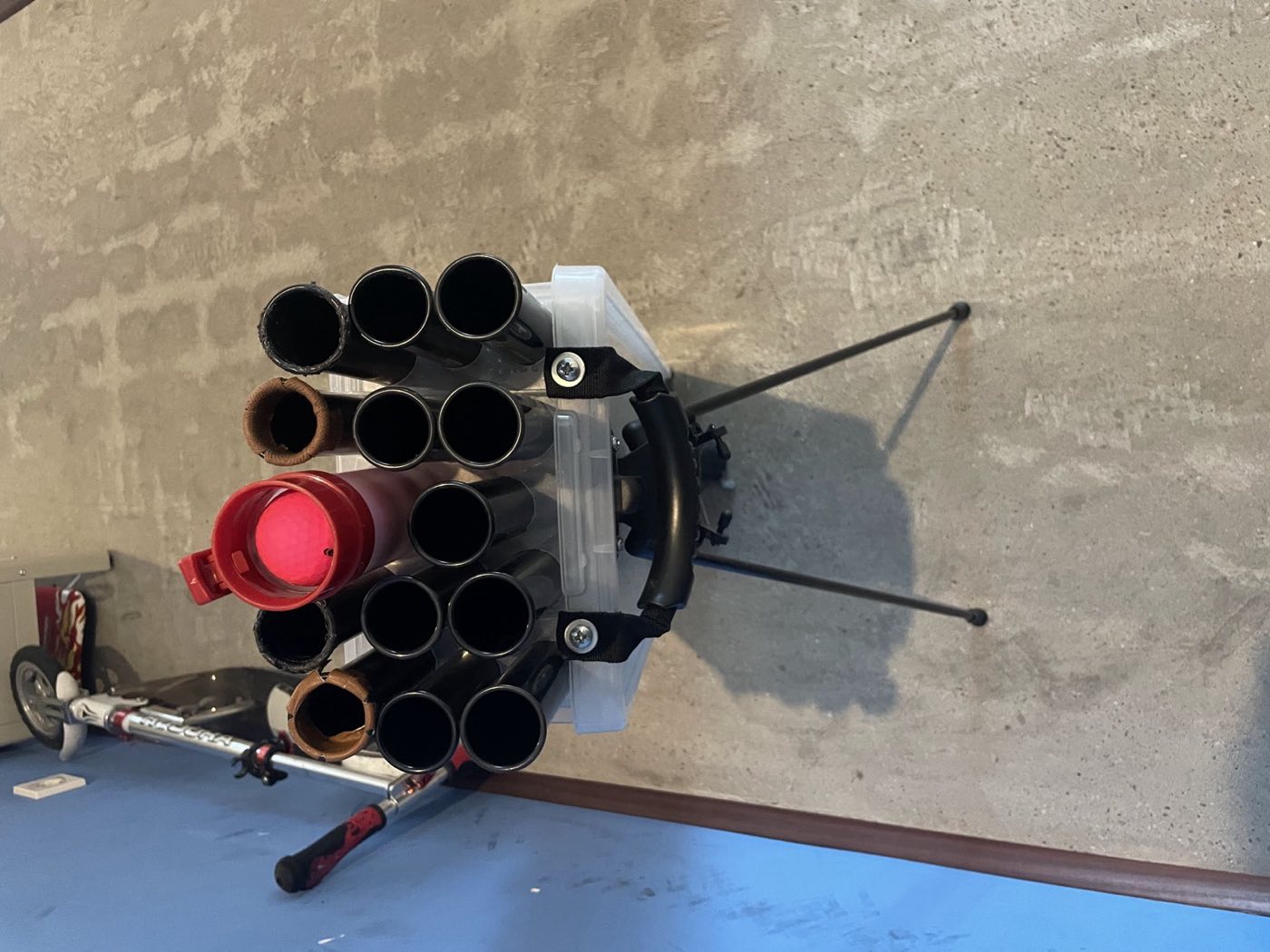
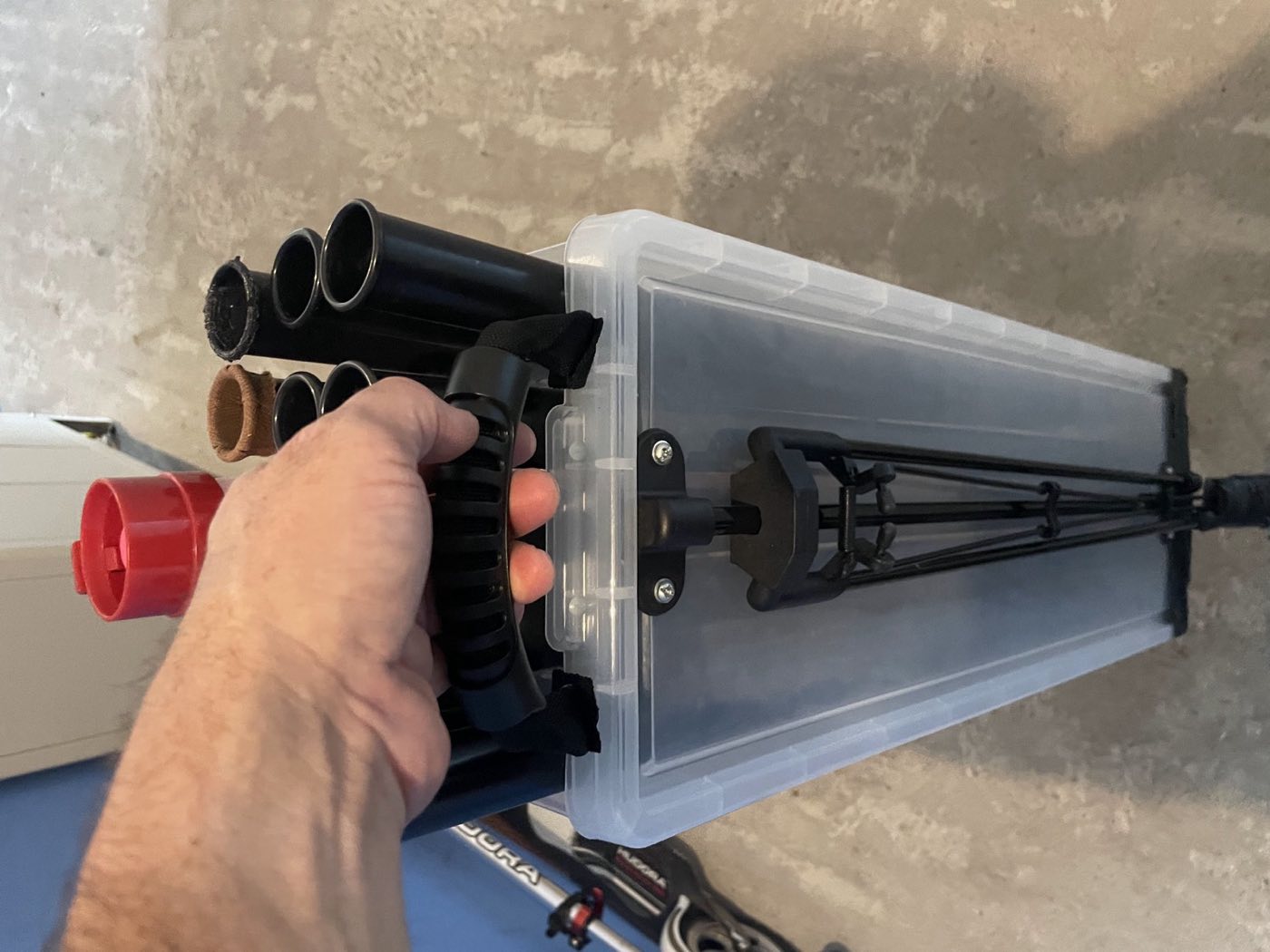
tall rigid case, a KlickFix rail on the back panel, a row of tubes inside to
keep the clubs separated, a fold-out stand leg on the bottom and a carry
handle on top. It has been ridden to golf roughly once a week since it was
built, through three seasons.
Nothing has come off the rack. Not once, not on kerbs, not on Berlin
cobblestones. The mount was never the hard part — KlickFix has been solving
that problem for decades, and borrowing a proven standard beat inventing a
bracket.
What v3 got right is the sequence: clip off, kick out the leg, and it
is simply a golf bag standing on the turf. You are not unpacking
luggage in a car park. That single motion is what turns a bike accessory into
something a golfer would own.
What went wrong
The tubes. The rims of the club tubes rub against carbon shafts, and carbon
does not forgive that. In personal use there is a workaround — a wrap of foam
at the contact point on each club — and it works perfectly well. It is also
far too fiddly to ever ship to a customer.
That single defect is why v3 has never been for sale, and why there are two
version fours instead of one. Two smaller notes from the same three seasons:
heel clearance is tight on some frames while pedalling, and heavy rain has
never been properly tested.
Off the bike, standing on its own leg. The whole product idea in one photo.The back panel: a standard KlickFix rail, the same hardware used on millions of panniers.The tubes: excellent at separating clubs, unkind to carbon shafts. The one flaw that stopped the product.Carry handle on top, stand leg folded flat underneath. Both borrowed from parts that already existed.
Side branch · abandoned
The one that was screwed shut
Verdict: it works, and it was abandoned anyway
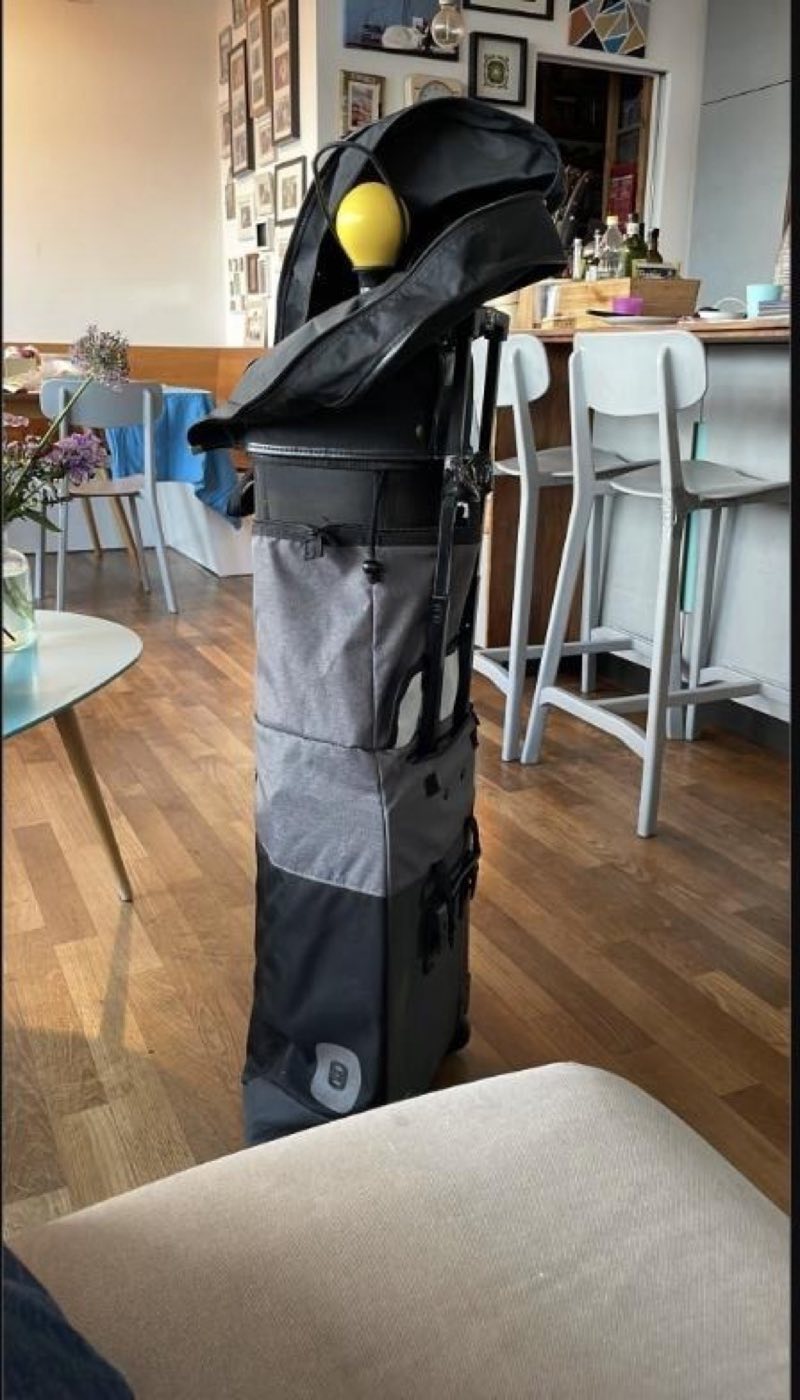
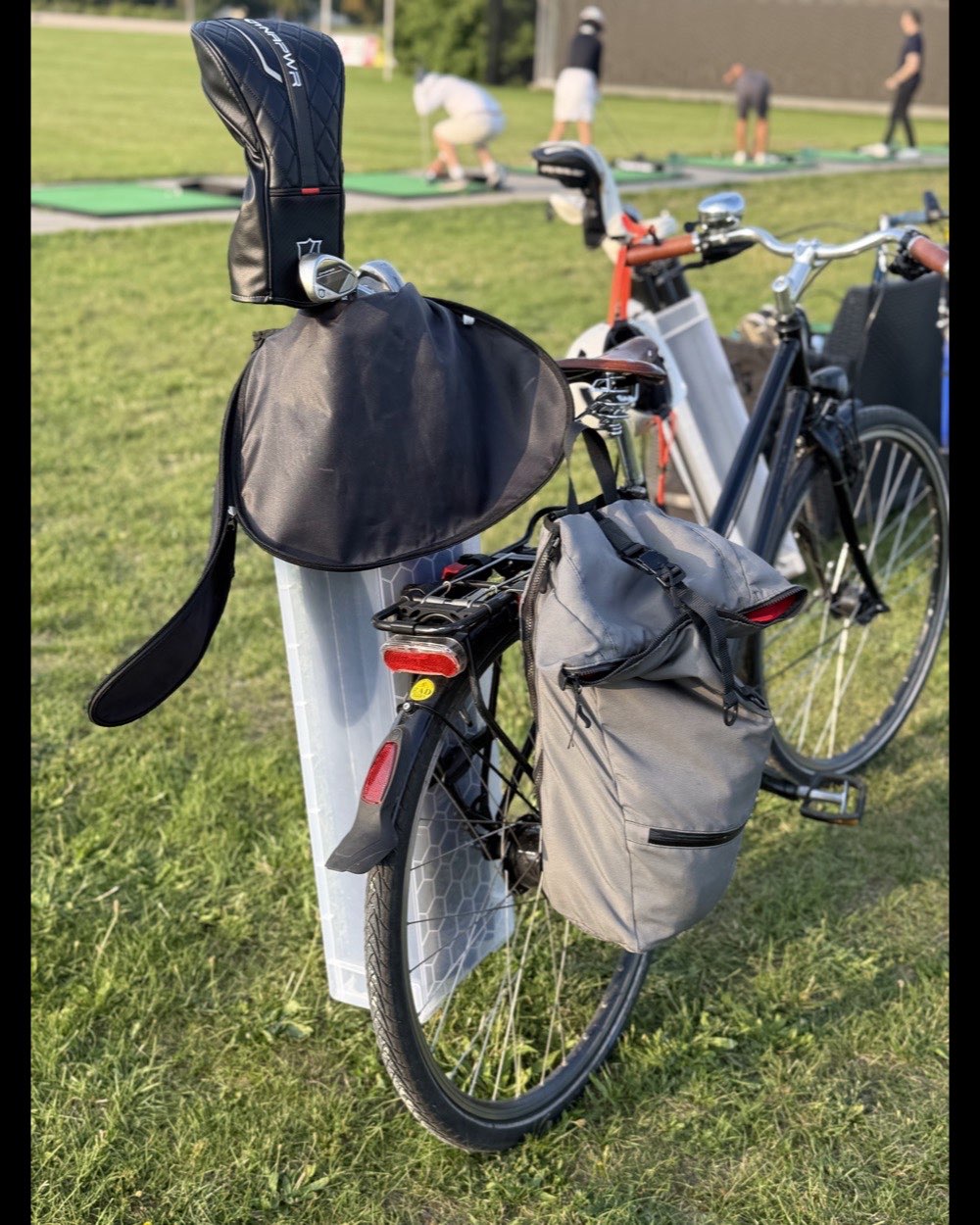
After v3 came one more attempt at a better box, and it went after the club
problem from the inside: instead of a row of rigid tubes, a complete slim
soft golf bag — a pencil bag with its own rain hood — was built into the
case and screwed permanently in place. The clubs then sit
in padded fabric the whole way, and nothing rigid ever touches a carbon
shaft.
That part worked. It is essentially version A's idea, arrived at with a
whole bag rather than a purpose-built interior, and it proves the principle:
a soft lining really does make the abrasion problem disappear. The rain hood
came along free, covering the clubs on the ride.
Why it was dropped
Two things, and both are about ownership rather than engineering. The bag is
bolted in — it cannot be lifted out, swapped, washed or
carried on its own, so whatever is wrong with that bag is wrong with the
product permanently. And this one has no stand leg: at the
course it does not stand up.
That second one is fatal. Clip off, kick out the leg, and it is a golf bag
standing on the turf — that single motion is the product. A version that
can't do it isn't a cheaper VeloCaddie, it's a different, worse object.
So it was ridden, it was judged, and it was set aside. What survives it is
worth keeping: a soft interior is the right answer to the carbon problem,
but it has to be designed into the case — serviceable, replaceable,
and never at the cost of standing up on its own.
The soft bag inside the hard case, its own hood folded over the mouth. Fixed in place — this is as far apart as the two go.On the rack, hood up. The mounting was never the problem — what happens after you take it off was.
2026 · v4, in progress
Two version fours
Status: both being built and ridden this season
Rather than argue about it on paper, both candidates get built and ridden, and
the one that survives the season wins. They start from the same conclusion —
the tubes have to go — and take opposite routes out of it.
A — Solobox
Keep everything v3 got right and solve club protection inside the case: a
proper divider top with soft funnels and a lined interior, instead of bare
tubes. The case remains the golf bag. One object, lightest possible setup, and
the closest thing to a product that already has three seasons of testing
behind it.
The hard part is precisely where the damage happens today: clubs are longer
than the case, so they exit over an edge. That edge has to be perfect.
B — Dockingbox
Split the problem in two. A rigid shell mounts to the rack and stays with the
bike; a complete soft golf bag drops into it and lifts out at the course, to be
carried on your back like any other bag.
The carbon problem disappears entirely — the clubs never touch anything rigid.
On the course you carry a bag designed to be carried. The cost is that you own
two things instead of one, and the whole assembly gets heavier. There is also
an interesting side door: a shell like that could be sold on its own, to fit
slim bags people already have.
Update, August 2026: B is on the road
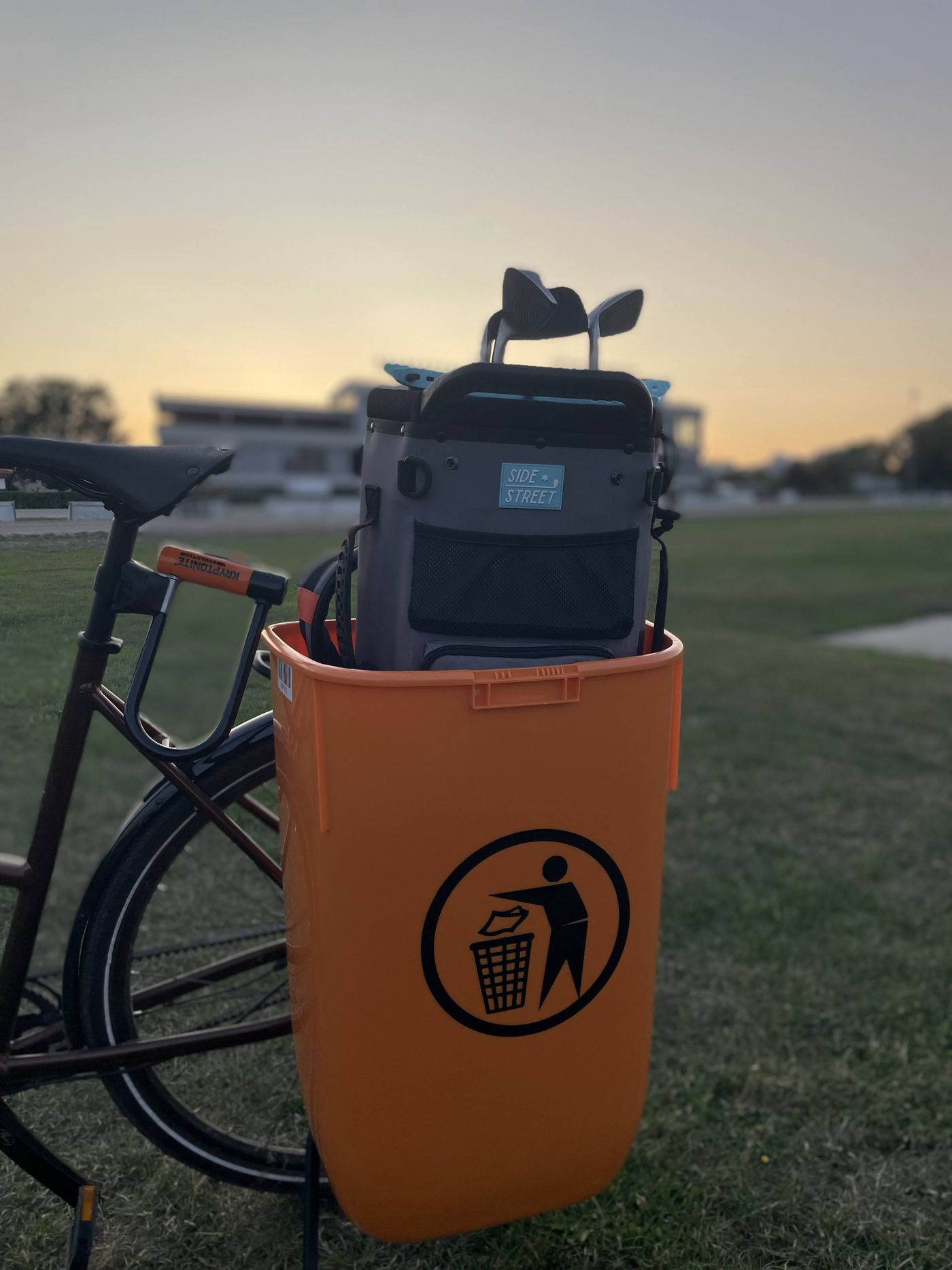
The Dockingbox is no longer just a plan. The first shell is mounted — on the
same KlickFix rail that has carried v3 for three seasons — and has done its
first rides: an errand run with groceries, then an evening ride to the range
with a slim carry bag docked inside. Tested with a reduced set of clubs so
far, and it went surprisingly well. The full evaluation against the list
below is still ahead.
First evening at the range. The shell is still an off-the-shelf bin, pictogram and all — the docking idea underneath is the thing being tested.
One of these becomes the first VeloCaddie you can actually buy. Which one is
genuinely undecided — which is why there is a questionnaire at the bottom of
this page.
How they'll be judged
Club protection — no abrasion, and no per-club workaround
Pack time — clubs from hallway to rolling, in minutes
Weight — can you lift it off the rack with one hand?
Ride handling — sway out of the saddle, heel clearance, kerbs
On the course — carrying, standing on turf, pulling a club during play
Looks — does a stranger ask where to buy one, or what the bin is for?
Weather — rain on the ride, dew on the turf
Explainability — can it be described in one sentence?
That last one is not a joke. Three seasons of riding this thing around Berlin
have produced a steady trickle of strangers at the driving range asking where
they can get one. The correct answer, so far, has been "you can't". The point of
v4 is to change that answer.
Five questions
Which version four would you want?
You've just read everything we know. A minute of your answers decides more than
another month on the workbench — especially question three.